Processes and work standards in one system
Processes are documented, responsibility is defined. Results stay consistent even as the company grows or the team changes.
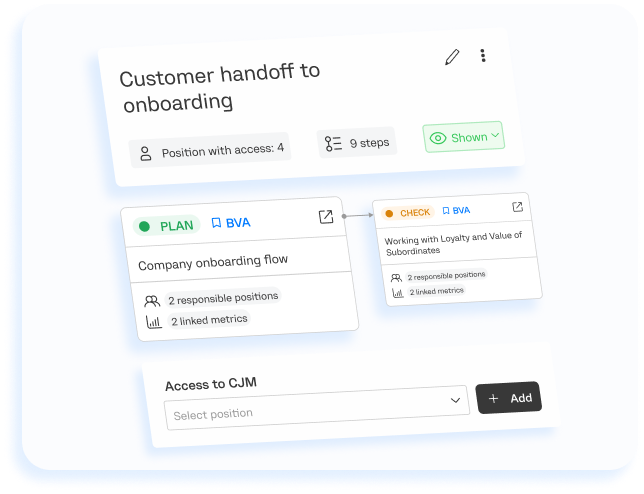
Roles, responsibilities and business processes are documented in the system. Each task has a defined workflow and a responsible owner.
Key processes are described step by step: who initiates the process, what stages it goes through, and what result should be achieved. New employees can complete tasks without constant explanations from the manager.
Each process defines the initiator, responsible roles and control points. It is clear who is responsible for the result. Tasks do not get “stuck” or passed around.
Execution standards for tasks, service and communication are documented. Sales, marketing campaigns or customer requests are handled using the same process.
Changing employees does not change the quality of the result.
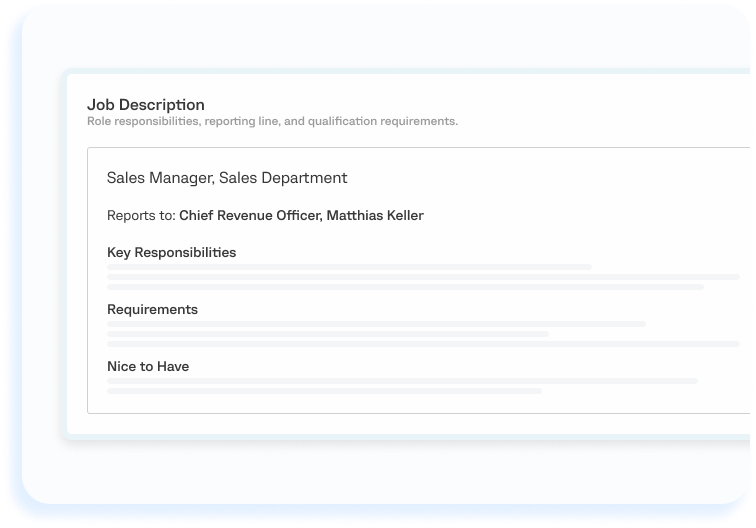
Job Description
A live role guide in the company. For each position, the system defines:
- main purpose of the role
- responsibility area
- specific responsibilities
- workflows and processes
- expected result
- related metrics
Each employee understands exactly what they are responsible for.
Processes
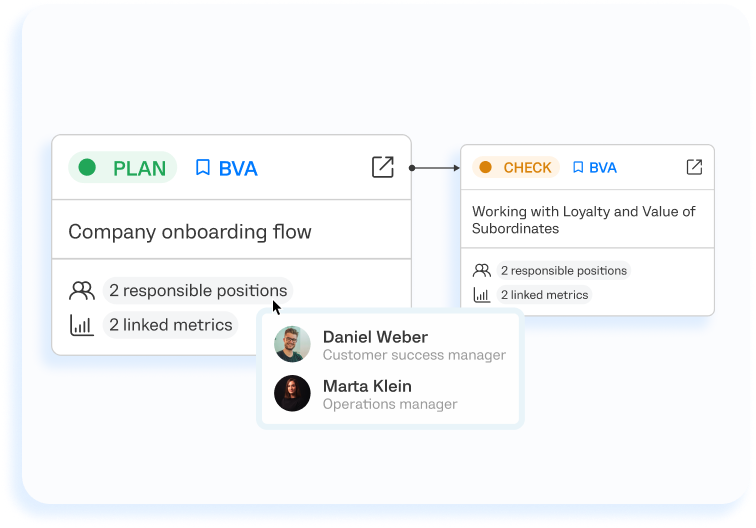
A catalog of company business processes. Each process includes:
- initiator
- responsible roles
- sequence of steps
- control points
- expected result
Processes become transparent, measurable and manageable.
Guidelines
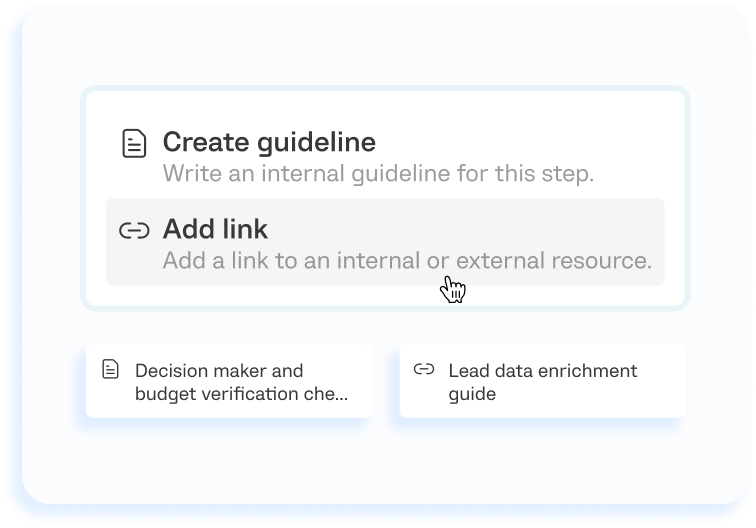
Company-wide work rules. This includes:
- quality standards
- decision-making principles
- internal communication rules
- customer interaction standards
The team works using a shared system, not personal approaches.
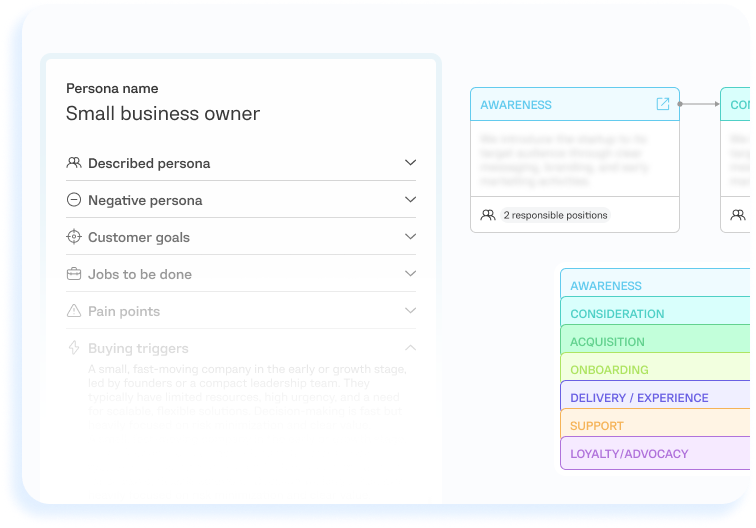
CJM (Customer Journey Map)
A map of the customer journey in the company.
You can see:
- all customer touchpoints
- responsible roles
- service standards
- potential risk areas
Customer experience is managed systematically, not reactively.
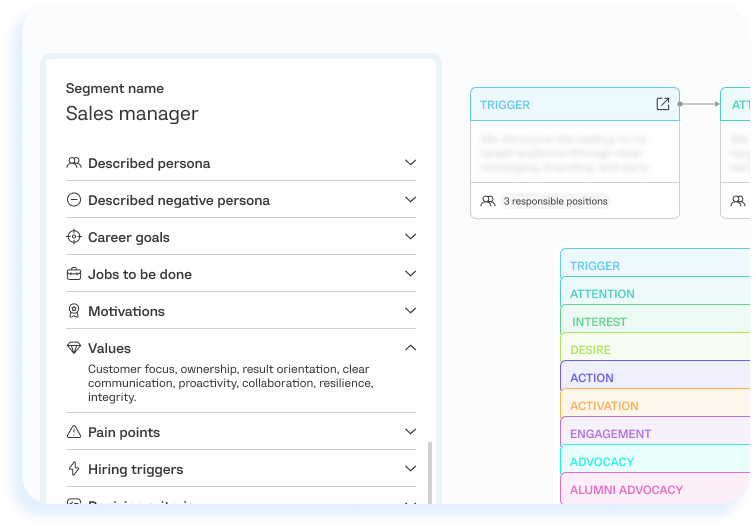
Create Employee Journey Maps for different roles and teams
Capture:
- career goals and motivations
- employee values and expectations
- decision-making criteria
- engagement and retention factors
- reasons for turnover and potential risks
- key activities, competencies, and KPIs Build a transparent employee journey from hiring to development, retention, and professional growth.
I always felt that if I stepped away from the business for even a week, everything would simply fall apart. Many decisions and processes depended on me. But once I described the processes, roles, and working rules, managing the business became much calmer. Now I no longer have to explain the same things every time; everything runs by clear rules.

FAQ
In this module, standards are connected to roles, processes and responsibility.
This is part of the business operating system, not just file storage.
No.
Companies usually start with key processes: sales, marketing, customer service and operations.
Yes.
Especially if the company plans to grow.
Standards allow the team to scale without losing quality.
Yes.
Processes change as the business grows, so standards can be edited and updated at any time.
✔ Processes become consistent across the company
Everyone knows how to complete tasks, regardless of department or person.
✔ Onboarding becomes faster
New employees start working faster using documented processes and instructions.
✔ Managers no longer need to explain the same things repeatedly
Work standards are documented and available to the whole team.
✔ Knowledge does not disappear when employees leave
Processes, decisions and rules stay in the company.
✔ Processes can be analyzed and improved
Documented SOPs help identify bottlenecks and improve operations.
✔ The company scales without losing quality
New teams work using the same standards.
Build a system your team can rely on